

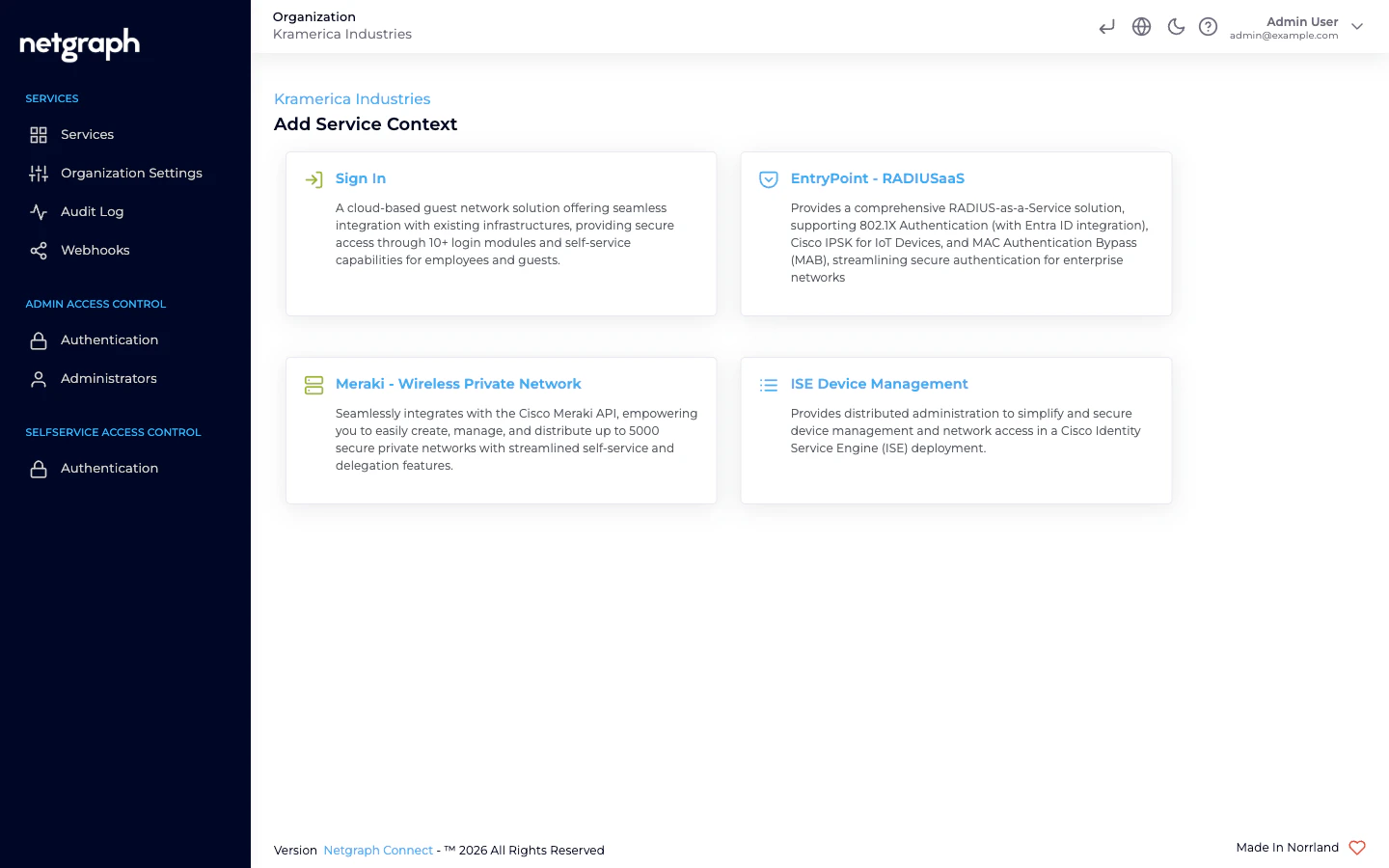
EasyPSK for Cisco Networks — labelled Meraki WPN in the admin — lets you run one building-wide SSID where every apartment, room, or unit gets its own private Wi-Fi bubble. The people sharing a unit share one Pre-Shared Key. Different units can’t see each other at the Wi-Fi layer. A resident you appoint as Group Administrator can rotate the key, invite roommates, and see which of their own devices are connected — all from the Self-Service portal, which feels like their home router. It is designed for shared-space environments where one SSID, one key per unit is the right shape: student housing, co-living, senior living, short-stay rentals, hotels-with-apartments, and small-office buildings where every tenant gets a desk-cluster.Documentation Index
Fetch the complete documentation index at: https://wiki.netgraph-connect.com/llms.txt
Use this file to discover all available pages before exploring further.
The core idea — a Wireless Personal Network per unit
A Wireless Personal Network (WPN) is a Wi-Fi bubble on a shared SSID, scoped to one group of people. In a student-housing scenario, an apartment is one WPN. The roommates sharing it are its Self-Service Users. One of them is the Group Administrator — the resident who owns the passphrase on behalf of the unit.- All apartments in the building broadcast the same SSID.
- Each apartment has its own Pre-Shared Key.
- Devices in apartment 301 can’t reach devices in apartment 302 at the Wi-Fi layer, even though they’re on the same SSID.
- The Group Administrator rotates the key for their own apartment from the Self-Service portal, without involving you.
Who operates EasyPSK
Organization administrators configure the Meraki Dashboard integration, create the Wireless Personal Networks (often one per apartment), and invite each unit’s Group Administrator. From that point the Group Administrator manages their own bubble — inviting roommates, rotating the key if it leaks, looking at which devices have joined. You stay out of the per-unit details.Prerequisites
You’ll also need:- A Cisco Meraki dashboard with at least one wireless network running MR-series access points.
- A Meraki Dashboard API key with permission to manage SSIDs, networks, clients, and group policies in that dashboard.
- An SSID (or one you’re willing to convert) configured for Identity PSK without RADIUS in the Meraki dashboard.
Where to go next
Quickstart
Connect the Meraki dashboard and onboard the first apartment.
Wireless Personal Networks
The hero concept — a private Wi-Fi bubble per unit.
Self-Service portal
What the Group Administrator sees — their “home router”.
Connect EasyPSK
Wire the Context to your Meraki dashboard.